In this article
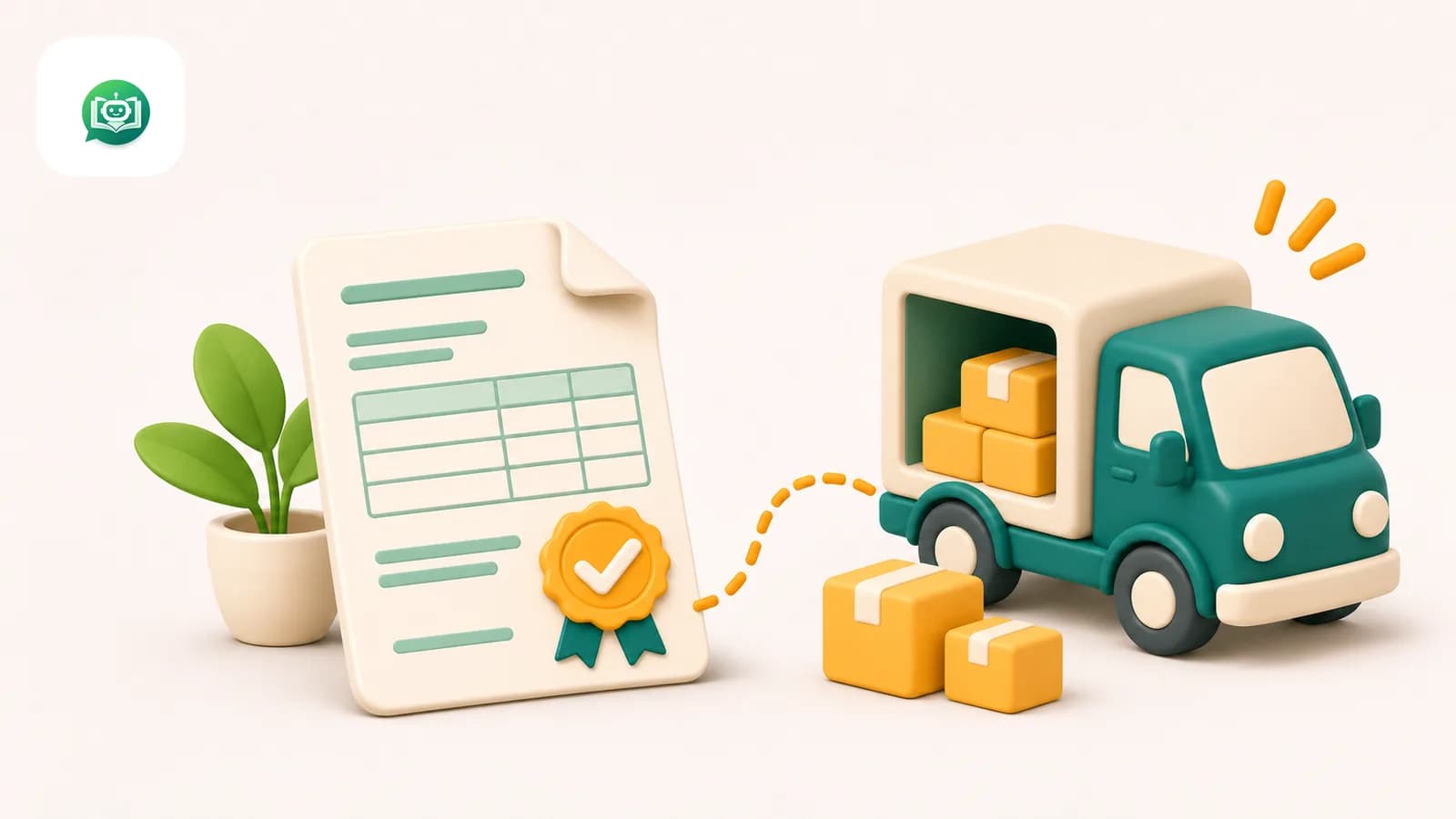
An e-invoice and an e-way bill do different jobs. An e-invoice reports your invoice to the government's Invoice Registration Portal, which gives it a reference number and QR code. An e-way bill is a document for moving goods, generally needed when a consignment is worth more than ₹50,000. One is about the sale, and the other is about the goods on the road. Many B2B sales need both.
This guide explains the rules only. It's general information, so check your own case with your CA, especially as GST rules change often.
The difference at a glance
| E-invoice | E-way bill | |
|---|---|---|
| What it's for | Reporting a B2B invoice | Tracking goods in movement |
| Who it depends on | Your annual turnover | The consignment and its movement |
| Main limit | Aggregate turnover of ₹5 crore in any year from 2017-18 | Consignment value above ₹50,000 |
| Applies to | Goods and services | Goods only |
| Where it's made | Invoice Registration Portal (IRP) | E-way bill portal |
| You get | IRN and signed QR code | E-way bill number |
| Main rule | Rule 48 | Rule 138 |
Do you need to generate e-invoices?
Under Notification 10/2023-Central Tax, e-invoicing has applied since 1 August 2023 to registered businesses whose aggregate turnover crossed ₹5 crore. The test is any financial year from 2017-18 onward, so a lower turnover this year doesn't automatically take you out of it.
It covers B2B supplies, exports and similar documents, including credit and debit notes. It's not for ordinary sales to unregistered consumers.
Certain businesses are exempt, according to the e-invoice portal's manual:
- SEZ units
- Insurers, banks, financial institutions and NBFCs
- Goods transport agencies
- Passenger transport services
- Multiplex cinema admission services
- Government departments and local authorities
Businesses above the turnover limit that are exempt have to carry a declaration on their invoices under Rule 46.
What happens without an IRN?
Rule 48(5) says a document that should be an e-invoice but isn't issued that way "shall not be treated as an invoice". That can affect your buyer's input tax credit, so it's worth taking seriously.
The 30-day limit
From 1 April 2025, according to the GST portal's advisory, businesses with an aggregate annual turnover of ₹10 crore or more can't report invoices, credit notes or debit notes older than 30 days. If this applies to you, generate them promptly rather than in a month-end batch.
When do you need an e-way bill?
Rule 138 generally requires one when goods worth more than ₹50,000 move. The value includes tax, but excludes exempt goods on the same invoice.
Worth knowing:
- Inter-State job work and certain handicraft goods need one at any value.
- Some goods are exempt, such as LPG for household and NDEC customers, PDS kerosene, postal baggage, jewellery, currency and used personal effects. Rule 138(14) has other exemptions, such as non-motorised conveyance.
- States can notify their own exemptions for certain areas. Check your state's position.
Who generates it?
- Part A (goods and invoice details) is filled in by the registered person, or by a transporter they've authorised. For goods sold through an e-commerce operator or sent by courier, that operator or courier can fill it on your authorisation.
- Part B (the vehicle) is filled in by whoever is moving the goods.
A bill without Part B isn't valid for road movement, except for movement up to 50 km within a state between a business and a transporter. A Part A number stays valid for 15 days for updating Part B.
How long is it valid?
| Item | Rule |
|---|---|
| Normal cargo | 1 day for every 200 km or part of it |
| Over-dimensional cargo | 1 day for every 20 km or part of it |
| Extension | Within 8 hours before or after expiry |
| Cancellation | Within 24 hours, unless verified in transit |
The e-way bill portal also says that since 1 January 2025, a bill can only be generated within 180 days of the document date, and can't be extended beyond 360 days from when it was generated.
Three common situations
These examples are samples, to show how the rules fit together.
| Situation | E-invoice? | E-way bill? |
|---|---|---|
| ₹8 crore turnover. B2B sale of goods worth ₹2 lakh, shipped by truck | Yes | Yes |
| ₹2 crore turnover. B2B sale of goods worth ₹2 lakh, shipped by truck | No, if turnover has never crossed ₹5 crore | Yes |
| ₹8 crore turnover. B2B sale of goods worth ₹30,000, within the city | Yes | Generally no, under the value limit |
| ₹8 crore turnover. Service invoice to a business for ₹2 lakh | Yes | No, there are no goods |
How they fit together
If you need both, the usual order is:
- Create the invoice in your billing software.
- Report it to the IRP and receive the IRN and QR code.
- Generate the e-way bill, either separately or using the IRN details where supported.
- Share the invoice and e-way bill with whoever moves the goods.
The e-way bill needs the invoice's details, so correct invoice data saves work in both places. Our guide to the GST invoice format covers the fields.
Mistakes to avoid
- Assuming you're out of e-invoicing because this year's turnover dropped
- Using the turnover of one branch instead of the whole PAN
- Waiting until month-end to report invoices when the 30-day rule applies to you
- Moving goods with Part B empty
- Letting the bill expire because of a delayed truck
- Sending goods on a split invoice to avoid the limit. This can be treated as evasion
Frequently asked questions
Is e-invoicing required below ₹5 crore?
Not at the moment, under the current notification. But you should check for updates, as the limit has been lowered several times.
Do I need an e-way bill for services?
No. E-way bills are for the movement of goods.
Can one invoice have both?
Yes. An invoice can have an IRN and also be the basis for an e-way bill.
Does an e-invoice replace my invoice?
You still issue your invoice. The IRP validates the details and returns an IRN and signed QR code, which go on the invoice you give the buyer.
Where can I learn about the other invoice fields?
Read our GST invoice format guide. If you sell online too, see how to start an online store. For managing invoices, stock and dues together, see KhataBhai's billing tools and the Online Store.
Sources
- Notification 10/2023-Central Tax: ₹5 crore e-invoice threshold
- E-invoice portal: manual on exemptions
- GSTN advisory: time limit for reporting e-invoices
- CGST Rules, Rule 48: manner of issuing an invoice
- CGST Rules, Rule 138: e-way bill
- E-way bill portal announcements
General information as of 31 Oct 2026, not tax or legal advice. Rules change, so confirm your own case with your CA.